
Why Play Is More Than Just Fun

Updated: Feb 1
Why Play Is More Than Just Fun: The OT Perspective on Learning Through Play
Introduction: “They’re just playing…” or are they?
To some, it might look like your child is just building a LEGO tower, pretending to be a superhero, or jumping on the couch for the tenth time. But from an occupational therapist’s perspective, play is how children explore, learn, connect, and build foundations for daily life.
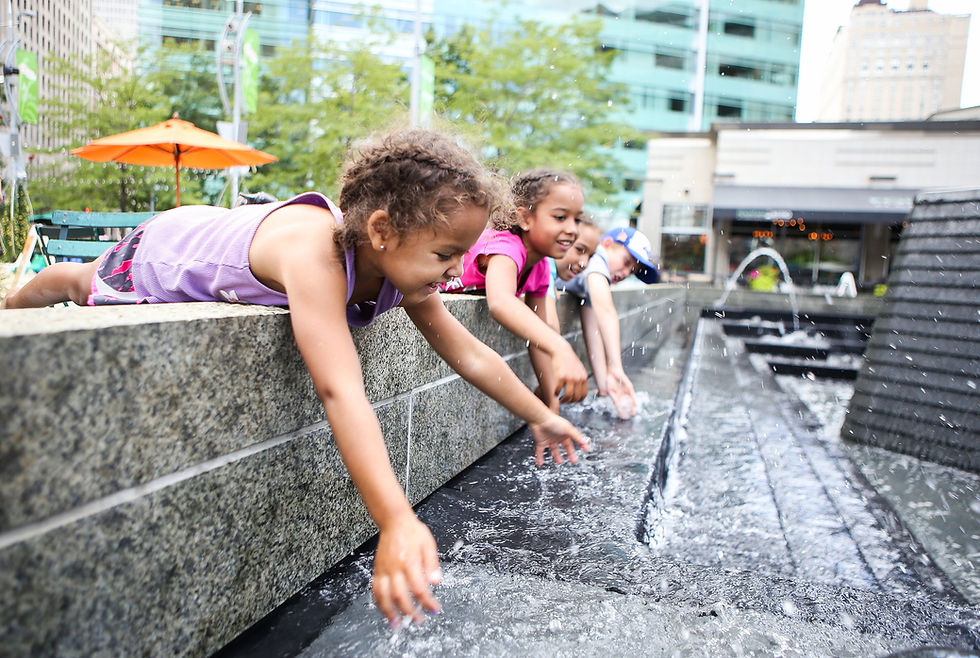
At Little Peaks OT, we view play not only as a child’s natural language—but also as one of the most powerful tools for development. While your child is pretending, climbing, scribbling, or rolling, they’re also working on coordination, planning, emotional regulation, communication, and more.
In this blog, we’ll explore:
Why play is critical to development
How OT uses play therapeutically
The hidden skills being developed during different types of play
Easy ways to encourage purposeful play at home
Why Is Play So Important for Development?
Play isn’t just a break from learning—it is learning. Through play, children:
Develop physical coordination and body awareness
Practice social interaction and emotional understanding
Build problem-solving and language skills
Explore cause and effect
Develop independence, confidence, and creativity
For neurodivergent children or those with developmental delays, play can also be a way to process the world at their own pace, use sensory input to feel regulated, and express things they can’t yet say in words.
"Play is the work of the child.” — Maria Montessori
What Does Play Look Like in OT?
Little Peaks OT uses play-based therapy because it aligns with how children naturally learn. But there’s a lot of intention behind what we choose to do in sessions.
You might see:
A child “baking” in a pretend kitchen to build sequencing and bilateral coordination
A swinging game designed to stimulate the vestibular system and support attention
A turn-taking board game to practice social-emotional skills
Building blocks to improve visual-spatial planning and fine motor skills
We meet each child where they are—whether they engage in parallel play, sensory play, imaginative scenarios, or structured games. The child leads the play, and we guide it therapeutically.
Types of Play and the Skills They Build
Here’s a closer look at what’s really happening during different types of play, and how each kind supports development:
1. Sensory Play (e.g., sand, water, slime, messy play)
Skills Developed:
Sensory regulation
Tactile processing
Emotional calming
Fine motor exploration
Interoceptive awareness (e.g., noticing hot/cold, wet/dry)
Why it matters: Sensory play helps children who are sensory-seeking or avoidant explore their environment safely and build tolerance. It also provides a foundation for attention and emotional regulation.
2. Pretend Play (e.g., dress-ups, role-playing, imaginary stories)
Skills Developed:
Language and communication
Emotional processing
Perspective-taking and empathy
Executive functioning (planning, sequencing)
Creativity and symbolic thinking
Why it matters: Pretend play is essential for developing theory of mind, flexible thinking, and emotional resilience. It also gives children space to “try on” experiences safely.
3. Physical Play (e.g., climbing, jumping, rough-and-tumble, obstacle courses)
Skills Developed:
Gross motor coordination
Balance and core strength
Proprioception and vestibular input
Self-regulation
Risk assessment
Why it matters: Movement-based play helps regulate the nervous system and improves attention and learning readiness. It’s essential for children who “can’t sit still.”
4. Constructive Play (e.g., building blocks, puzzles, arts & crafts)
Skills Developed:
Fine motor skills
Visual-motor integration
Spatial awareness
Problem-solving and persistence
Bilateral coordination
Why it matters: These types of play support academic readiness and self-confidence, especially when tasks are open-ended and achievable.
5. Social Play (e.g., turn-taking games, collaborative activities)
Skills Developed:
Communication and negotiation
Understanding rules and fairness
Flexibility and resilience
Conflict resolution
Co-regulation and emotional literacy
Why it matters: Social play is often challenging for neurodivergent children. OT sessions can support these interactions in a safe, guided environment.
How Can Families Support Play at Home?
You don’t need fancy toys or Pinterest-worthy setups to foster developmental play. In fact, simple, everyday activities are often the most meaningful. Make use of what you have at home, get creative, use an open mind and allow your ideas to blend with your child's as you connect through the power of play with a purpose! You may like to explore ideas such as:
Obstacle courses using couch cushions, tape, chairs = motor planning + fun
Pretend post office = writing, sequencing, and social play
Sensory bin with rice, scoops, and hidden objects = tactile play
Cardboard box creation = construction + imagination
Draw and act out emotions = pencil control, emotional expression + facial recognition
Remember: Let your child lead. Your role is to observe, join in when invited, and create a space where play is safe, messy, and free.
What If My Child Doesn’t Know How to Play?
Some children—often seen in children with ASD, global developmental delay, or sensory processing challenges—may not engage in typical play on their own. This is common and something we support every day in OT.
We focus on:
Play skill development (from exploration to symbolic play)
Following their interests (even if it’s lining up toys or repetitive actions)
Building joint attention and turn-taking
Modelling new ways to engage through adult-child interaction
If your child avoids or struggles with play, it’s not a failure—it’s a skill that can be gently supported and nurtured.
Play Is the Path
Play is not just something to fill time between “real learning”—it is the real learning. It’s how children develop motor, cognitive, emotional, and social foundations that will serve them for life.
At Little Peaks OT, we use play to build trust, confidence, and connection. Whether your child is exploring, climbing, creating, or pretending, they are learning so much more than meets the eye. And you, as their caregiver, are their most important playmate and guide.
Want More Play Support?
Let us know if you'd like:
A Play Skills Development Tracker
A Printable Sensory Play Guide
A Toy-Free OT Activities Pack
Play-based handouts for teachers or support workers
We’re here to help your child thrive—through play, through connection, and through joyful everyday moments.
Get in Touch
Website: www.littlepeaksot.com.au
Email: admin@littlepeaksot.com.au
Phone: Little Peaks OT is a sole-therapist practice. I’m often with clients, so please leave a message and I will get back to you at the earliest opportunity.
Location: Jervis Bay, NSW and Telehealth Australia Wide


